


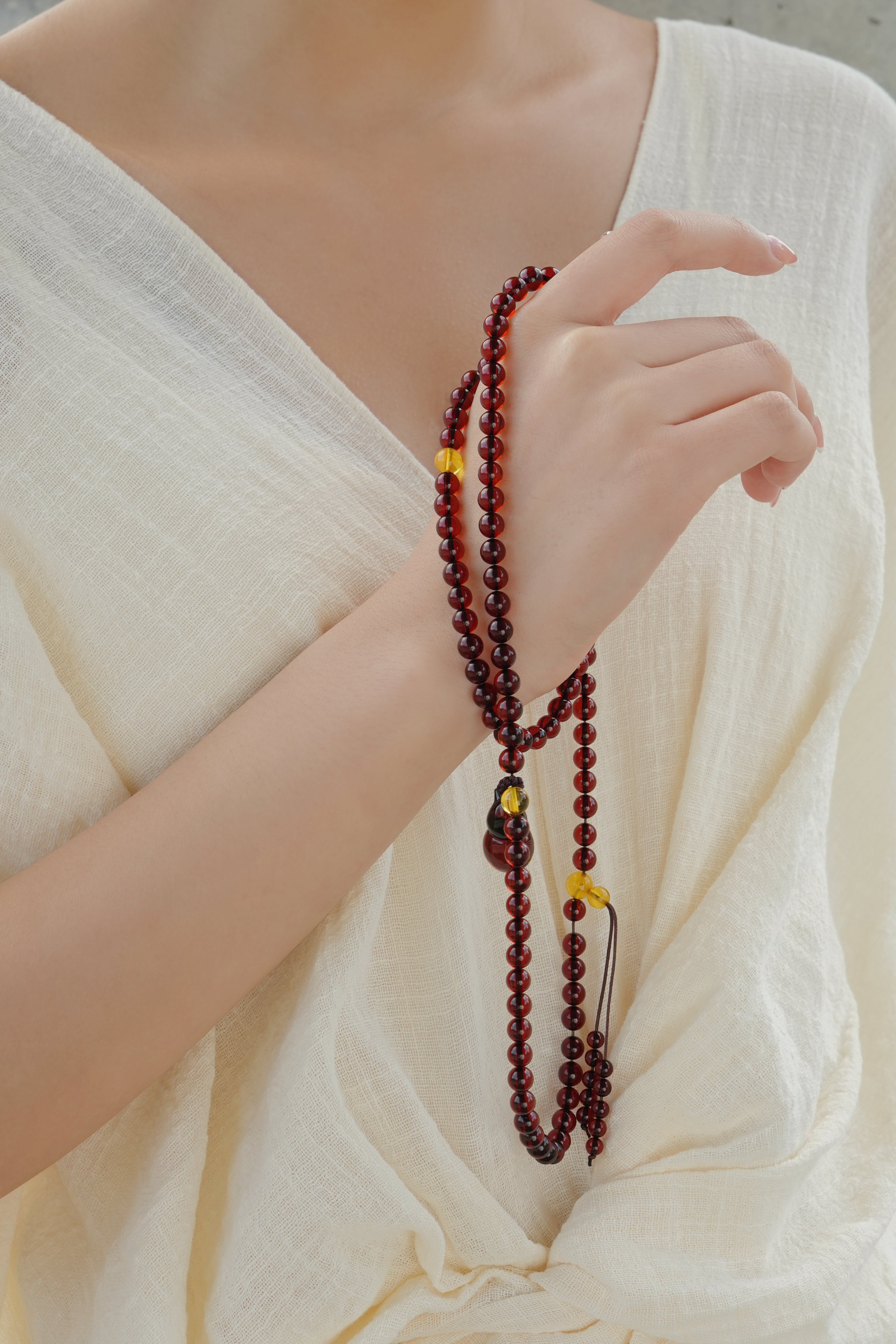

The Silent Language of Gold and Stone: Mindful Jewelry Wearing as a Personal Ritual
Explore how the simple act of wearing jewelry becomes a source of emotional grounding, turning everyday habits into mindful personal rituals.
The morning usually begins in a blur of small anxieties. We wake up already thinking about the emails waiting in the inbox, the weather outside, or the persistent rattle in the car’s engine. In the midst of this mental noise, there is a quiet, almost invisible moment at the dresser. It’s the second you reach for that one necklace—the one with the slightly tarnished clasp—and feel the familiar weight of it settle against your collarbone. This isn't just about getting dressed. It is the first moment of the day where you are actually present in your own body.
Mindful jewelry wearing isn’t a spiritual achievement or a task to be added to a to-do list. It’s simply the act of noticing that specific coolness of metal against skin before it warms up to match your temperature. We spend so much of our lives rushing toward the next thing that we forget to inhabit the current thing. When we stop to actually feel the click of an earring backing or the slide of a bangle over a wrist, we are taking a tiny, rebellious stand against the rush of the world.
The Quiet Resonance of Presence
We often treat our belongings as tools or decorations, things that serve a purpose and then fade into the background. But mindful jewelry wearing changes the relationship from "using" to "witnessing." It’s about the awareness that follows you throughout the day. You’re sitting in a tense meeting, and you find your thumb tracing the smooth surface of a ring. In that split second, you aren’t in the meeting anymore; you are back in your physical self, reminded of your own edges and boundaries.
This kind of presence doesn’t require a meditation cushion or perfect silence. It’s a gritty, real-world kind of awareness. It’s noticing how a bracelet clinks against the laptop as you type, or how a heavy pendant swings when you lean over to tie a child’s shoelace. These aren't distractions; they are tether points. They are small, sensory reminders that even when your mind is spinning at a hundred miles an hour, your body is right here, safe and accounted for.
The Language of Repetition
There is a strange, beautiful history written into the jewelry we wear every day. If you look closely at a ring you’ve worn for five years, you’ll see the tiny scratches and the way the band has molded itself to the unique shape of your finger. It isn’t perfect anymore, and that’s exactly why it matters. This is the language of repetition. The act of putting on the same piece every morning, day after day, year after year, builds a layer of quiet meaning that brand-new things simply cannot possess.
We find comfort in things that stay the same while we change. You might be having a day where you feel completely different—older, more tired, or perhaps unusually hopeful—but the weight of your favorite watch remains exactly as it was yesterday. This familiarity acts as a silent witness to our lives. By choosing the same pieces repeatedly, we aren't just being practical; we are creating a sense of home that we carry on our skin. We are building a relationship with an object that knows our rhythms better than almost anyone else.
Intention Beyond the Aesthetic
We’ve all had those mornings where we put on a certain piece of jewelry and then immediately take it off because it "feels wrong." It might look fine in the mirror, but it doesn't match the internal weather. Intentional jewelry wearing is about listening to that instinct. It’s the realization that what we put on our bodies can either drain our energy or provide a much-needed shield.
Choosing a piece with intention is a private act of self-care that no one else can see. It might be wearing a hidden locket because you need to feel close to a memory, or choosing a pair of bold, heavy earrings because you need to feel brave for a difficult conversation. It’s not about how the world sees us; it’s about how we feel when we catch our reflection in a shop window. This intentionality turns a mundane habit into a soft form of armor, helping us navigate the day with a bit more grace.
The Stability of Everyday Habits
Life is messy and unpredictable. Plans fall through, people let us down, and the weather changes without warning. In this constant state of flux, our everyday jewelry habits offer a rare kind of emotional grounding. There is a reason why so many of us reach for our necklaces or twist our rings when we are nervous. These objects are our "safe" things. They are the constants in a world of variables.
This grounding doesn't come from the price tag or the prestige of the piece. It comes from the fact that it has been through it all with us. That ring was there when you got the promotion, and it was there when you got the bad news. When we wear jewelry every day, we are essentially packing a small "survival kit" of emotional stability. It’s a physical reminder that we have survived everything life has thrown at us so far, and we have the scars—and the well-worn jewelry—to prove it.
When Jewelry Becomes Part of the Body
There is a specific kind of panic that sets in when you realize you’ve forgotten to put on a piece of jewelry you wear every day. Your hand goes to your neck or your wrist, and the absence feels like a physical ache. This is the moment you realize that the object is no longer "outside" of you. It has become part of your sensory map. It is no longer something you wear; it is something you inhabit.
This integration is the peak of the mindful experience. It’s when you no longer have to think about the jewelry because it has become a natural extension of your gestures. You know exactly how much space your rings take up when you reach into a pocket. You know the specific sound your bracelets make when you rest your arms on a table. This physical intimacy is a quiet miracle of human adaptation. We take these inanimate objects of stone and metal and, through the simple act of keeping them close, we breathe life into them until they feel as vital as a limb.
The Architecture of a Personal Ritual
When we look at these small moments collectively—the morning selection, the mid-day fidgeting, the evening removal—we see a larger pattern emerging. These aren't just random habits; they are the threads of a much bigger story. We are creating a personal environment that supports our emotional well-being. We are choosing to move through the world with a bit more attention, a bit more intention, and a lot more heart.
It is within these small, mindful choices that we find the roots of jewelry worn as a daily ritual. It isn't a performance for others, and it doesn't require a special occasion. The "occasion" is simply being alive and navigating the day with as much presence as we can muster. By treating our jewelry with this kind of quiet respect, we are ultimately treating ourselves with that same respect. We are acknowledging that our daily experience is worth noticing.
A Final Breath of Awareness
At the end of a long day, there is a profound relief in taking off your jewelry. The skin feels cool again, and there is a sense of laying down the day’s burdens along with the metal. As you place your pieces back into their box or onto a tray, you might take a single breath to acknowledge that the day is over. You made it through.
Mindful jewelry wearing doesn't solve our problems or change the world, but it does change how we feel as we move through it. It’s a reminder that beauty and meaning don't have to be saved for "special" moments. They are available to us every single morning, right there on the dresser, waiting to be picked up. The magic isn't in the gold or the silver; the magic is in the person who decides to pay attention.



Comments