


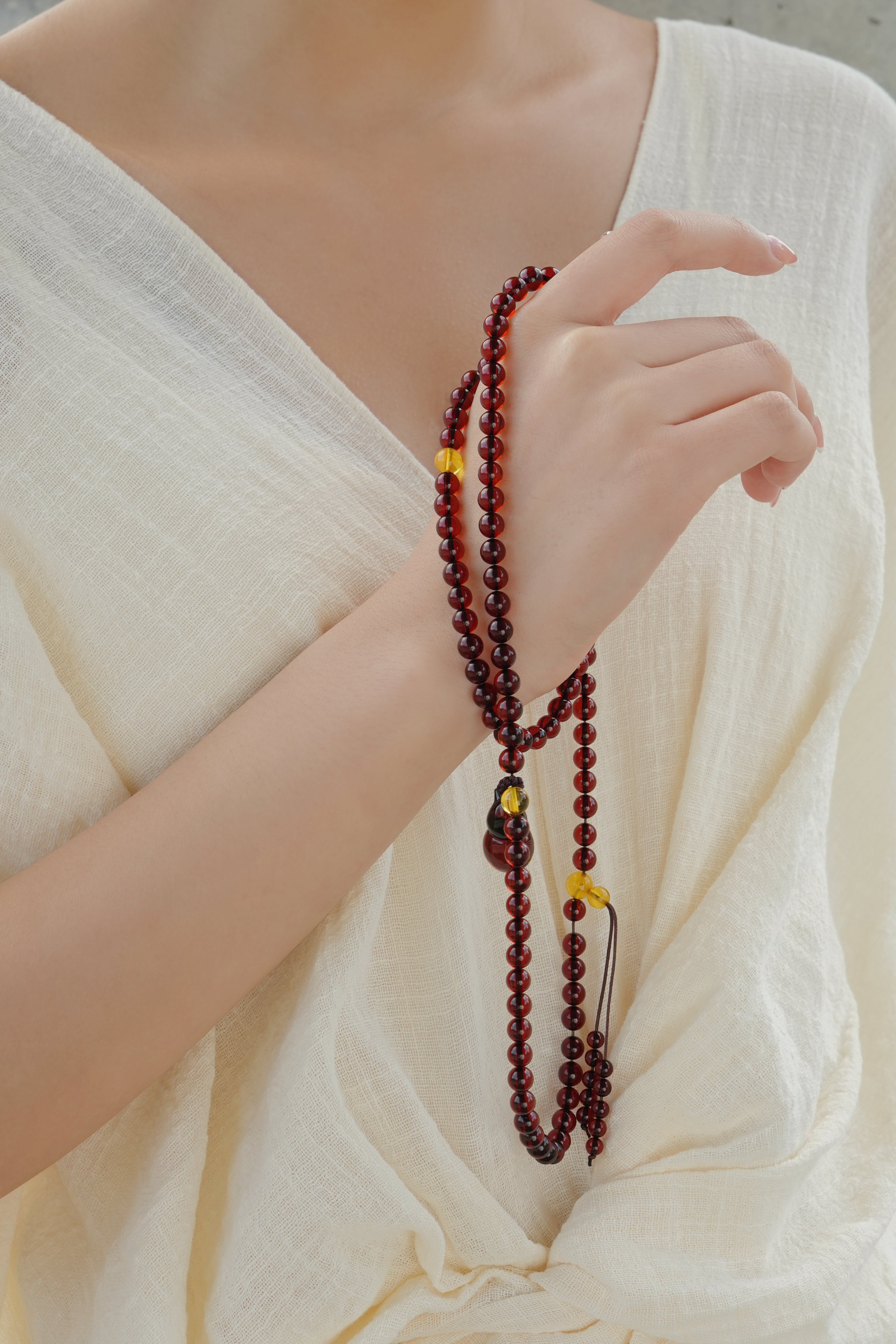

Jewelry and the Quiet Self: Wearing Meaning Without Explanation
Explore how jewelry acts as a private anchor for the "quiet self," transforming everyday adornment into a silent, powerful ritual of identity.
You’ve probably seen it before—or done it yourself. You’re in a meeting, or a crowded cafe, and you see someone reaching up to fiddle with a tiny, mismatched silver charm tucked under their collar. It isn't "styled" to match their outfit. In fact, it’s probably caught on a loose thread of a scarf.
But every time their fingers touch that cold metal, you can see their shoulders drop just a little. They aren't wearing it for the room. They’re wearing it to remind themselves of a version of their life that has nothing to do with deadlines or expectations.
Jewelry and identity live in that friction between who you’re supposed to be and who you actually are. It’s the one thing you wear that isn't for the people looking at us, but for the person looking out from behind your eyes.
Jewelry and the Quiet Self
There is a version of you that doesn’t have a LinkedIn profile. It’s the part of you that still feels like a messy teenager, or the part that is quietly grieving, or the part that is fiercely hopeful despite everything. You carry this self around in silence, and sometimes, a piece of jewelry is the only thing that acknowledges it.
This isn't about finding a necklace that "matches your personality"—that sounds like a sales pitch. It’s about reaching into a drawer at 7:00 AM and picking the one thing that feels right before the world starts demanding things from you.
Maybe it’s a ring that’s a little too tight, or a thin chain that always gets tangled in your hair and takes ten frantic minutes to undo in front of the mirror. It’s annoying, but you wear it anyway. It’s the physical anchor for the person you are when you don’t have to perform.
Jewelry as a Mirror of Identity
If you look at your jewelry box, you aren't looking at fashion choices; you're looking at a map of who you’ve been. Your identity is fluid—some days you feel sharp and defensive, other days you’re just soft. You use jewelry to balance that internal weather.
On a day when you feel invisible, you might put on a heavy silver cuff. Not so people see it, but so you can feel it. You need that cold weight on your wrist to remind you that you’re actually there, taking up space. This isn’t a performance for an audience; it’s a conversation with the mirror.
You don't owe anyone an explanation for why you chose gold over silver today; the meaning is just in how the metal hits your mood.
Wearing Meaning Privately
There is a specific kind of power in a secret. When you wear a piece of jewelry under your clothes, or a ring on a chain hidden from sight, you’re holding onto a piece of yourself that isn't for sale. This is the opposite of a trend.
It’s about the items that stay on when the party is over and the heavy earrings finally come off. It’s the tiny stud you never take out, or the string bracelet that is frayed and a bit ugly but represents a promise you made to yourself.
In those quiet moments, jewelry is just a companion. It’s a tactile reminder that you have a history and a life that exists entirely independent of what anyone thinks of you.
Emotional Significance Reinforcing Identity
We aren't born with a fixed identity; we build it, brick by brick, through what we endure and what we love. Jewelry is the physical evidence of that construction. That one ring you bought yourself after your first big promotion? It’s not just gold; it’s a record of your ambition.
The locket that holds nothing but a scrap of paper? It’s a record of your privacy. These pieces reinforce who we are every time we put them on.
They act like a "save point"—no matter how far we wander or how lost we feel, clicking that clasp brings us back to a version of ourselves that was strong, or loved, or certain. It’s about carrying your own timeline on your skin, even the parts that have faded.
Jewelry as Symbolic Self-Expression
Most people think self-expression is a performance, but the most important kind is the one that happens in the dark. It’s the quiet communication between you and the objects you choose.
You might choose a rough, unpolished stone because you’re tired of trying to be perfect. You don't have to explain that to your boss or your partner. In fact, it’s better if they don't get it.
Jewelry allows us to express things that are too complex for words—our contradictions, our quiet rebellions, our unvoiced grief. It is a language of symbols that you speak to yourself in the mirror every morning, a way of saying, "This is the truth of me today," without having to open your mouth.
Common Reflections on Jewelry and Identity
Does my jewelry need to match who I am every single day?
Not at all. In fact, some of the most powerful moments of self-expression happen when your jewelry contradicts your current state. You might wear a bold, heavy ring on a day when you feel fragile, using it as a borrowed bit of strength. It’s the balance you need to get through the day.
Is it okay to keep wearing something that no longer "fits" my current life?
We often feel pressure to purge things that feel "outdated," but identity isn't a linear climb; it’s a collection. That bracelet from a past version of yourself is a witness to your growth. Keeping it isn't about living in the past; it’s about honoring the person who got you to where you are today.
How do I find meaning in a piece that was just a random purchase?
Meaning isn't always built into the stone at the moment of sale. Often, the "identity" of a piece is earned through the miles you walk in it. A simple pair of studs can become your most significant possession simply because they were there during a difficult conversation or a sudden moment of joy.
The Internal Rhythm of Adornment
Even when worn privately, these pieces slowly become part of something larger — jewelry as a daily ritual. It’s the rhythm of the everyday—the click of the metal, the weight of the stone, the way a ring leaves a faint red mark on your finger—that makes it real.
It’s not a costume you put on to play a part; it’s a ritual of returning to yourself. It’s the sixty seconds of silence before you leave the house where you decide which version of your identity needs a little more support today. This ritual turns jewelry into something more than an object; it becomes a witness.
This quiet reflection on personal identity echoes the ideas explored in the emotional function of jewelry. When we stop caring about how a piece is "perceived" and start focusing on how it feels against our pulse, we find the true meaning of adornment.
It’s not about being decorated; it’s about being anchored. It’s the bridge between the world’s expectations and the person you are when no one is watching. Identity is made of these small, messy, unsaid things.
Next time you reach for a ring or a necklace, don't think about how it looks to the person across from you. Just feel the weight of it. Your jewelry is your own private map of where you’ve been and a compass for where you’re going. It is the art of staying true to yourself, one small, shimmering piece at a time.



Comments