


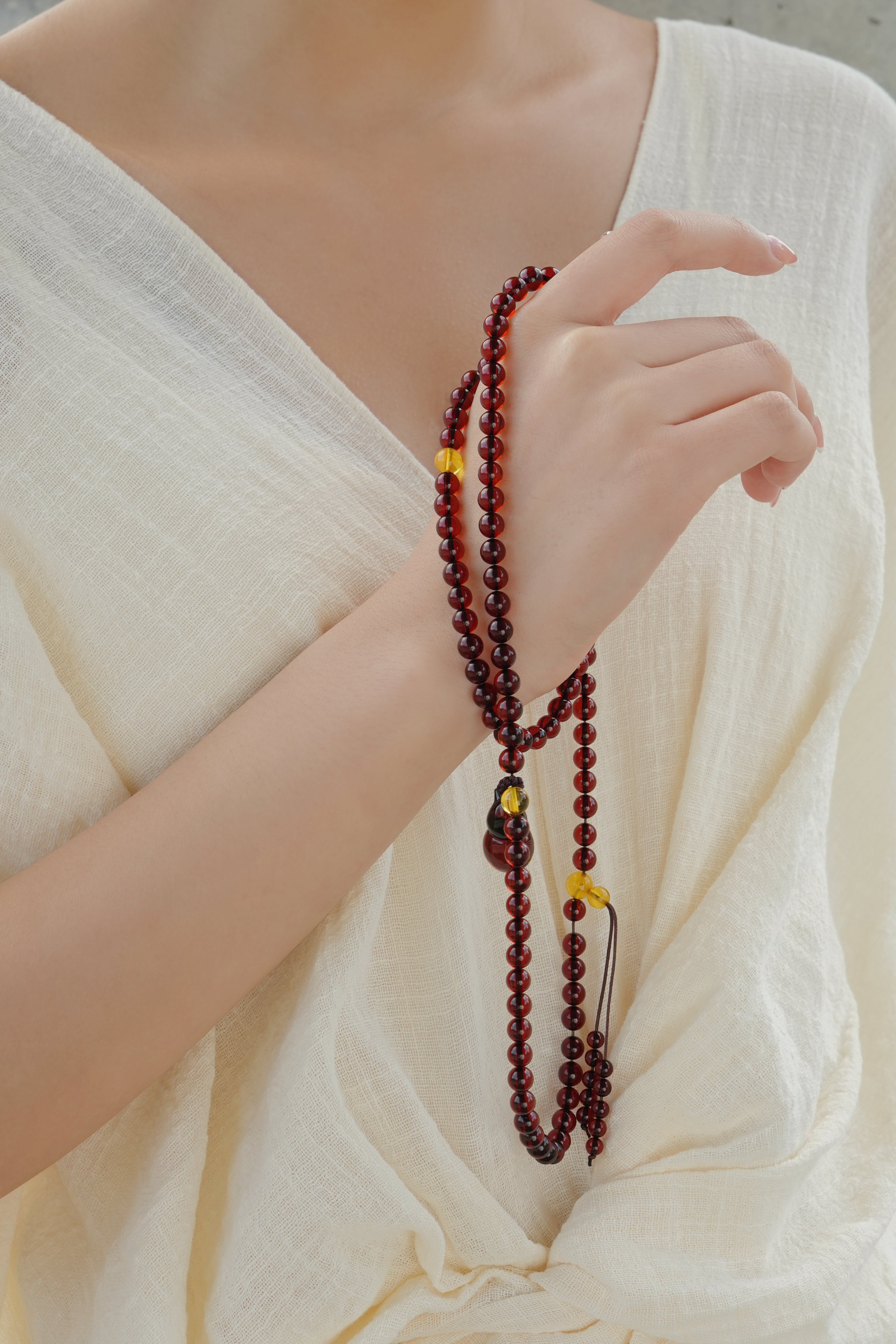

One-Bead, One-Story: The Cultural Meaning and Silent Language of Handmade Beads
Every bead is a vessel. Discover the deep cultural meaning and artisan stories behind handmade jewelry that anchors the wandering spirit.
If you close your eyes and hold a single handmade bead, you can almost feel the pulse of the hands that shaped it. It’s not just the weight of the stone or the cool surface of the glass; it’s the stillness of an artisan’s afternoon, the rhythmic breath of the maker, and a lineage of craft that stretches back long before we had words to describe it. In this sense, a bead is a vessel—it holds the silence of the maker and the noise of history. In a world of digital noise, these small spheres are anchors, reminding us that the most profound stories aren't always written in books; sometimes, they are worn against the skin.
The Universal Language of the Small
It is a strange, beautiful thought: that a person in a high-rise in Tokyo and a nomad in the Rift Valley might both reach for a strand of beads to feel grounded. Across the map of human history, beads have never been mere decorations; they are a universal dialect.
In the vibrant cultures of Africa, for instance, a bead is a biography. A specific flash of red in a Maasai necklace isn't just a color choice—it’s a signal of bravery, a mark of age, or a whisper of marital status. Here, the beads are not just worn; they are lived. We must remember that we spoke in beads long before we learned to write in ink.
Then there is the quiet gravity of Asia, where beads are tools for the spirit. A strand of prayer beads—whether it’s the warm scent of sandalwood or the icy clarity of jade—is a physical map of a spiritual journey. Each bead represents a breath, a mantra, or a step toward something larger than oneself. Weight, texture, and time. That’s all a bead really is, yet it connects us to the infinite.
The Soul in the Imperfection
We live in an age of relentless precision. A machine can churn out ten thousand identical glass spheres in an hour—perfect, symmetrical, and utterly silent. They tell no stories because no human breath was required for their existence. They represent efficiency, but they lack intimacy.
There is something quietly rebellious about a handmade bead. Its beauty lies in its "flaws"—the slight wobble of a hand-rolled clay bead or the unrepeatable swirl of color in lampworked glass. These are not defects; they are fingerprints. When an artisan sits down to carve a bead from wood or forge it from silver, they are investing the only thing they can’t get back: time. It reminds us that perfection is the language of the machine, but imperfection is the fingerprint of the soul.
One Bead, One Story: How Meaning Is Carried
Where does the story actually begin? It starts with the Material. There is a dialogue that happens between an artisan and the earth. A maker doesn't just grab a stone; they choose a mood. Lapis lazuli for a sense of the celestial; carnelian for an earthy warmth; or reclaimed wood for a sense of history.
Then comes the Process. It’s the ritual of the workshop—the smell of the kiln, the grit of the polishing cloth, the steady hand required to paint a pattern no larger than a grain of rice. Finally, there is the Sequence. The way beads are strung is a visual melody, where the rhythm of colors and the spacing of knots create a specific "song" for the wearer. Indeed, to choose a material is to choose a mood, and to string it is to compose a melody.
Seeking Meaning in a Fast-Fashion World
We are all a little tired of "disposable" things. We live in a landscape of trends that expire before the season even turns. In response, many of us are looking for objects that act as anchors. Choosing a strand of cultural beads is an act of intentionality. It’s a way of saying, “I value the path this object took to get to me.” This search for grounding is why certain materials and arrangements resonate so deeply with us. It is about finding a center in a chaotic world. For those seeking this specific harmony, Yuhe Jewelry’s Balance Collection honors this ancient tradition, using artisan beads to create a sense of equilibrium for the modern wearer.
In an age of disposable trends, a handmade bead becomes an anchor for the wandering spirit. It absorbs the salt of your skin and the memories of your days, becoming jewelry that grows older and wiser with you.
The Story Continues With You
The most beautiful thing about a handmade bead is that its story is never actually finished. The artisan begins the tale, the culture provides the context, and the material provides the soul. But the final chapter belongs to you. The artisan starts the story, but the wearer gives it a life.
A bead that was once part of a quiet workshop in a distant village eventually finds its way to your wrist. It witnesses your life. In time, the bead changes. It grows smoother from your touch or develops a patina that only comes with years of companionship. It becomes part of your personal mythology.
We don't just wear beads; we carry them. In a world that often feels fractured and fleeting, these small, handcrafted circles remind us that we are part of a continuous thread. They are a way for us to hold something beautiful and say: This is who I am, and this is where I’ve been.
Explore the Balance Collection to find the piece that completes your own story—designed not just to be seen, but to be felt.


Comments