


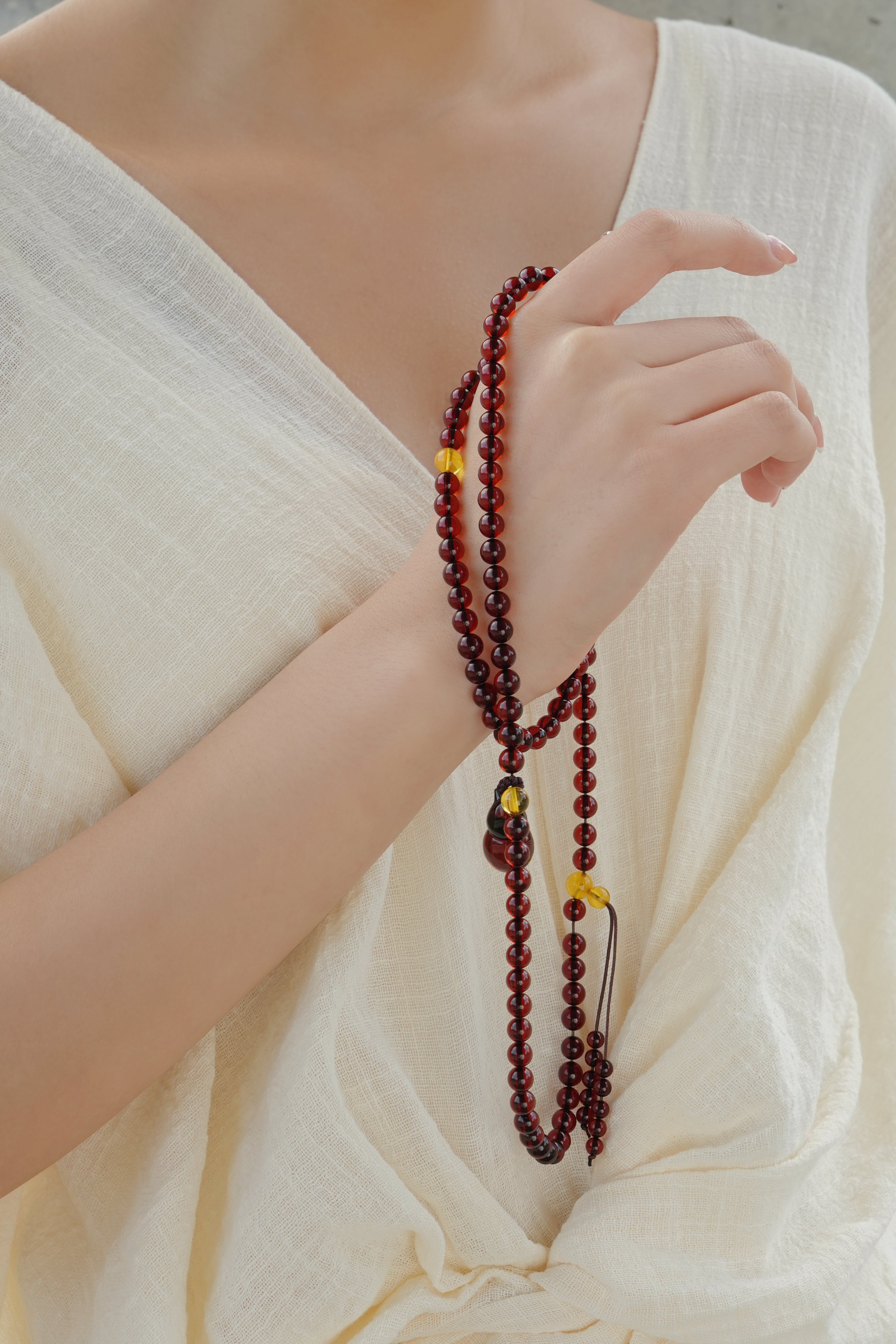

The 2:00 AM "Chokehold" Crisis: Can You Wear Jewelry While Sleeping?
Discover if sleeping in jewelry ruins your rest or your rings. A witty guide to nighttime safety, skin health, and metal fatigue.
You've definitely had this moment.
After a long day, the moment your body touches the bed, only one thought remains in your mind—don't move, just sleep.
Just then, you suddenly realize: you still have a necklace around your neck, earrings in your ears, and that ring on your finger that you didn't even notice during the day.
Should you take it off?
Honestly, unfastening the necklace clasp at this moment is more frustrating than solving a calculus problem. So, you'll most likely make that familiar decision: "Never mind, just for one night."
But the problem is—things are rarely that simple.
When you toss and turn in the middle of the night, the pendant suddenly presses against your collarbone; when you wake up in the morning, your fingers are slightly swollen, the ring seems to be "protesting."
At that moment, you might think:
👉 Is wearing jewelry to bed a lazy habit or a form of slow torture?
Is it safe to wear jewelry to bed? (The conclusion first)
Yes, but it's not recommended to do it long-term.
There's no absolute "right" or "wrong" in this matter; it's more of a trade-off.
It all depends on two things: what you're wearing and how you sleep.
If you're a very sound sleeper—you barely move all night—then it's generally not a problem.
But if you're a "sleep fighter," the situation is completely different.
Simply put, the logic behind wearing jewelry to sleep is simple:
- ✔ Convenient, less likely to lose it
- ❌ Uncomfortable, and could damage the jewelry
It seems like a small thing, but it's actually quite "realistic."
While you sleep, your jewelry is actually constantly "working."
Many people mistakenly believe that their jewelry rests while they sleep.
But the reality is—it's constantly passively enduring your movements.
And some changes you might not even notice.
Your fingers are "getting bigger."
It sounds a bit far-fetched, but it's true.
Our bodies experience slight swelling at night, and our fingers are no exception.
If you're wearing a tight ring, it might become an "invisible constriction" in the early morning.
Waking up in the morning with swollen, tight fingers is not uncommon.
Skin is actually "protesting."
Skin isn't a static surface; it needs to breathe and sweats.
When jewelry is in contact with skin for extended periods, especially if the material isn't stable, problems can easily arise:
- Slight redness
- Itching
- Even discoloration (yes, that "greenish" look).
This is especially noticeable in summer.
The "mysterious knotting ability" of necklaces
Almost everyone has experienced this.
Even the smoothest chain can become an "unsolvable puzzle" after a night in bed.
Sometimes it can even get tangled in clothing buttons or get stuck in your hair.
It's not serious, but it's really annoying.
The "red and black list" of jewelry to wear to bed
If you're too lazy to take it off, at least you can do some filtering.
✔ Types You Can Barely Wear to Sleep With
These are the "relatively low-risk" choices:
- Minimalist Rings: No protrusions, no complex structures, very inconspicuous.
- Short, Thin Necklaces: Not easily tangled, and don't shift much.
- Flat Stud Earrings: Rounded back design, won't prick your skin.
Simply put: The less noticeable, the safer.
❌ Types You Should Definitely Remove
Some jewelry is really unsuitable for sleeping with:
- Large Earrings (the pulling sensation is very realistic)
- Tall Diamond Rings (easily snags on the blanket or hair)
- Heavy Necklaces (uncomfortable under the neck)
- Cheap Alloy Jewelry
Especially the latter; if it's not stainless steel jewelry or other stable materials, sweat + friction can easily accelerate discoloration or oxidation.
Will wearing jewelry to sleep "damage" it?
In the short term, there might not be a problem.
But over time, the effects are cumulative.
Metals also experience "fatigue."
You toss and turn, sleep on your side, and press on your hand—these actions happen every day.
Slowly:
- Rings may deform
- Settings may loosen
- The surface may lose its luster
Even durable tarnish-resistant jewelry cannot withstand long-term friction and sebum buildup.
To put it bluntly:
You might not feel it, but your jewelry is "slowly wearing down."
If you absolutely must wear it to bed, is there a better way?
Yes, but you need to be more "picky."
Not all jewelry is suitable for 24-hour wear; accept that.
If you really want to achieve near-constant wear, consider these points:
- Choose lightweight → almost imperceptible
- Choose rounded pieces → no sharp edges or points
- Clean regularly → avoid sebum buildup
- Consider the material → prioritize stability and durability
For example, stainless steel jewelry is generally more suitable for everyday long-term wear and is less prone to problems from sweat or friction.
In conclusion:
Ultimately, sleep should be the most relaxing time.
Taking everything off is actually a simple way to "let yourself go."
Of course, many everyday jewelry pieces are now durable enough to withstand extended wear.
But occasionally taking them off to let your skin breathe and allow the jewelry to rest is a more comfortable option.
Discover YUHE Everyday Jewelry
In our designs, we focus on:
- Lightweight
- Fit
- Comfort during extended wear.
Simply put—making it feel like your "second skin."



Comments