


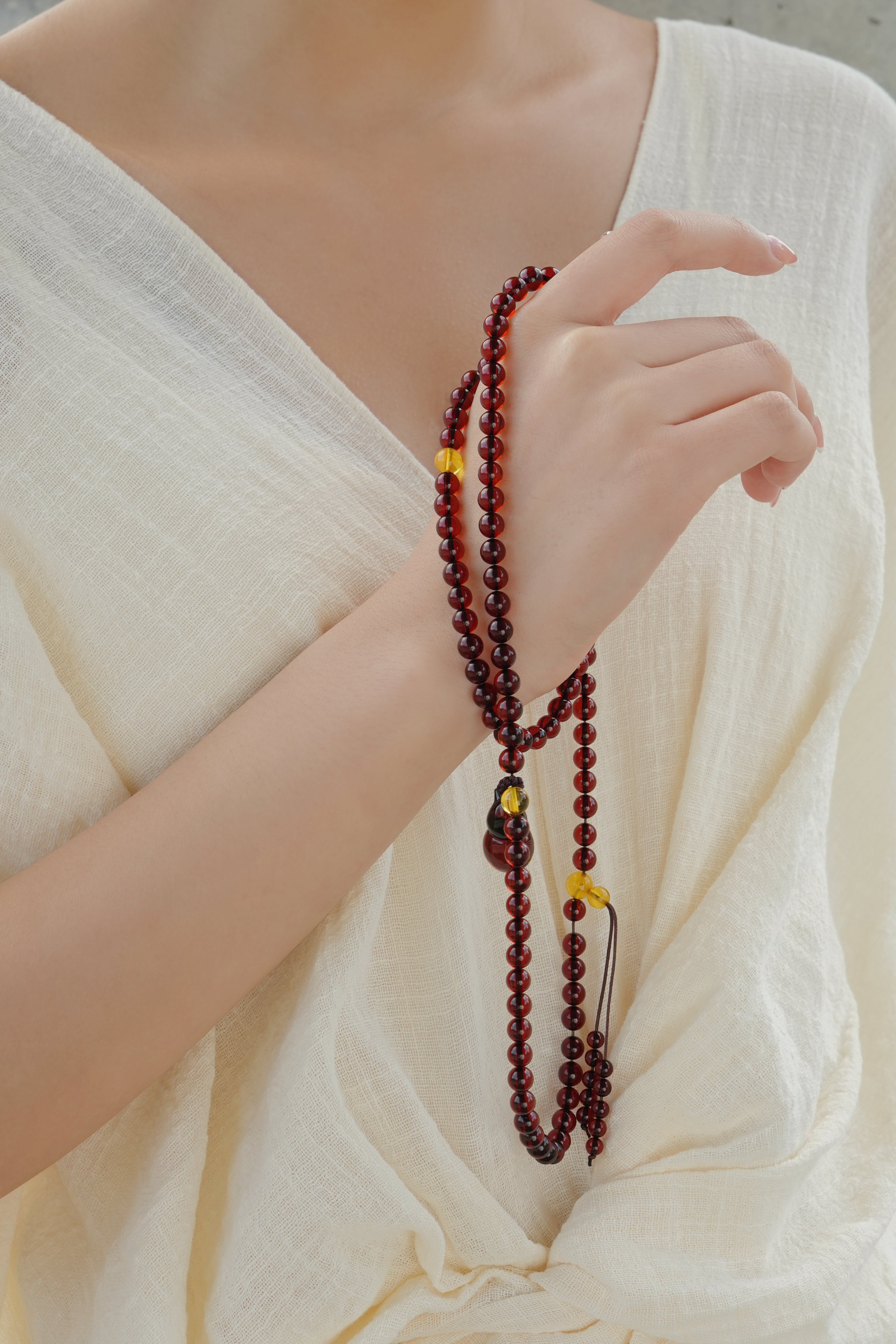

Beyond Bling: Why Cultural Jewelry is the New Luxury Currency
The global rise of cultural jewelry proves that true luxury is no longer about material bling, but meaningful heritage. We analyze why symbolic craftsmanship is fashion's new currency.
The quiet revolution didn't happen overnight, but suddenly, you couldn’t miss it. One season, the runways were dominated by slick, minimalist hardware. The next, our feeds were a vibrant kaleidoscope of talismanic pendants, intricate golden knots, and vividly hued African beads layered over couture. The shift from cold, conceptual adornment to something warm and storied has been seismic.
From the quiet sophistication of a Chinese knot subtly reinterpreted in rose gold anchoring a minimal Bottega Veneta suit, to the bold, unapologetic power of Berber silver layered over a sheer, bias-cut gown by The Row on a red carpet—the conversation has moved beyond mere sparkle to something much deeper. The compelling, global rise of cultural jewelry is not just an aesthetic trend; it’s a cultural declaration.
For a senior editor who has charted the tides of taste for decades, this movement is perhaps the most emotionally resonant in years. It’s a powerful pivot away from pure materialism and toward something rooted, authentic, and storied.
So, what exactly is this "cultural jewelry" that has suddenly captivated the global eye? While historically it encompasses any adornment linked to a specific heritage or historical practice, today we define it as modern cultural jewelry: pieces that consciously draw their spiritual, aesthetic, or symbolic language from a specific culture, interpreted through a lens of contemporary design. It is heritage jewelry that speaks the language of today. It's about wearing memory, identity, and a piece of history on your sleeve. And the fashion industry is finally listening.

Why Cultural Jewelry Is Rising Globally
The reasons for this collective pivot are as intricate as the designs themselves. They tell a story of a global society craving authenticity and connection in an increasingly digital world.
The Deep Dive: Anchoring Identity in a Digital Age
For a younger generation, the search for identity is paramount. As borders blur, there’s a simultaneous, powerful urge to anchor oneself in something real. Cultural identity in fashion becomes a way to express lineage, pride, and belonging without uttering a single word. Wearing a piece of symbolic jewelry is an act of quiet, personal reclamation—a visual dialogue with one’s own past.
Nostalgia, Heritage, and the Aesthetics of Meaning
In an era of fleeting micro-trends, consumers are seeking permanence. The aesthetic of heritage is inherently timeless. When a necklace carries the weight of a hundred-year-old family ritual, it transcends mere seasonality. This pursuit of the beautiful and the meaningful is driving demand for meaning-driven jewelry. People aren't just buying gold; they're buying the story, the blessing, or the protection imbued in the form itself.

The Human Hand: Why Imperfection is the New Luxury
The pendulum has swung away from mass-produced uniformity. There is a deep, renewed appreciation for the human touch. Artisan craftsmanship and handcrafted jewelry offer a compelling counter-narrative to industrial perfection. Consumers are seeking the subtle imperfection, the evidence of skill, and the hours of dedicated labor. This focus on skill elevates the piece beyond an accessory to a piece of wearable art.
Social Media and the Global Style Exchange
Instagram and TikTok have effectively dissolved the geographical barriers that once siloed fashion. We are now all witnesses to the richness and diversity of global style. This constant cross-pollination has fostered an appreciation for traditional jewelry motifs and a demand for their integration into everyday wear, accelerating this cultural fashion movement.
East-Meets-West: Weaving Cultural Motifs into Modern Design
The most exciting chapter of this story is how designers are elegantly translating ancient vocabularies into the lexicon of contemporary jewelry design. But the true artistry lies not just in why we wear it, but in how this ancient language is being spoken through a modern aesthetic.

The East-meets-West jewelry phenomenon is a prime example. Instead of crude replicas, we see traditional symbols reinterpreted with sophistication. The intricate, interlocking lines of a Chinese knot talisman might be pared down to a sleek, minimalist geometric pendant. The protective power of an evil eye or hamsa—a long-standing Mediterranean symbol—is cast in clean, almost architectural forms, making it suitable for a modern wardrobe.
Designers are not just copying; they are engaging in a respectful dialogue with history. They take the essence of a traditional form—perhaps the distinctive granulation of Etruscan gold or the purposeful layering of Maasai beads—and blend it seamlessly with modern silhouettes. This approach results in pieces that feel universally stylish yet carry a powerful cultural whisper. This is the definition of jewelry inspired by culture at its finest: honoring the source while defining the future.
Appreciation vs. Appropriation: The Fashion Industry’s Responsibility
As fashion dives into the global reservoir of culture, a necessary and ongoing conversation about responsibility must take place. The line between appreciation and appropriation is complex, but one central principle guides the most successful modern cultural jewelry brands: authenticity.
True cultural appreciation requires that the story behind the piece—the cultural symbolism in fashion—is respected, and that the cultural context is acknowledged. This is not about being preachy; it's about being honest and ethical.
- Storytelling: Brands are expected to transparently tell the story of the motif, the craft, and the artisan community. Who made it? What does it mean?
- Sourcing and Collaboration: The most respected brands commit to fair collaboration, ensuring that the original artists and communities benefit equitably from the global interest in their heritage. This commitment to transparent sourcing is no longer a footnote on the corporate social responsibility report; it is the very foundation of modern luxury credibility. It is a non-negotiable expectation for today’s conscious consumer.
When handled with respect and partnership, this movement is a powerful economic and cultural force that elevates global artistry, rather than merely consuming it.
How Today’s Consumers Wear Cultural Jewelry
The modern wearer is highly discerning. They don't just want a piece of jewelry; they want a personalized totem—a Wearable Manifesto.
 The Power of Meaning-Driven Layering
The layering trend has evolved. Instead of just stacking chains, consumers are stacking stories. A modern gold locket might be layered with an ancestral protective bead from West Africa and a simple, geometric pendant. This light luxury jewelry approach allows for the daily incorporation of profound meaning.
Minimalist Cultural Accents
Not all cultural expression has to be baroque or maximalist. Many prefer a subtle nod—a single delicate enamel charm or a ring featuring a simplified heritage-inspired accessory motif. This minimalist approach allows the meaning to be personal and potent, rather than a loud declaration.
Redefining Everyday Adornment
The concept of “good jewelry” is no longer reserved for the vault. Thanks to better quality and responsible pricing models, cultural pieces are being worn every day. A piece of symbolic jewelry worn daily acts as a constant, quiet connection to one’s values or heritage, transforming a simple outfit into a meaningful personal narrative.
What This Means for Designers & Brands
The cultural jewelry wave has issued a clear mandate to the design world: innovate with reverence.
The New Value Proposition: Emotional Connection
For too long, luxury has focused on rarity and price. Today, the ultimate luxury is emotional connection. Gen Z and Millennials, in particular, are not impressed by material value alone; they consider the provenance and the prayer just as important as the carat count. They want jewelry that can be traced back to a person, a place, and a practice. This is why the demand for cultural symbolism in fashion is rapidly outpacing the demand for unadorned status symbols.
Craft Revival as Innovation
The focus on artisan craftsmanship is forcing brands to invest in the preservation of heritage skills. Instead of outsourcing to automated factories, the path forward involves working directly with masters of traditional techniques, treating them as creative partners. This isn't charity; it's the future of sophisticated design.
The Heritage-Driven Brand Narrative
Brands that have authentic, deep ties to a specific culture—or that collaborate openly with those who do—are finding a distinct competitive edge. Their heritage-driven branding feels honest and grounded, resonating powerfully in a market saturated with generic products.
The shift is undeniable: the consumer wants depth. They want the piece to feel as good as it looks.
A Poetic Reflection: Memory, Adornment, and the Future
We are living in a moment where the personal is powerfully political, and the past is being openly celebrated in the present. Cultural jewelry is not just an aesthetic trend; it is a vital expression of global citizenship and personal narrative.

Each tiny detail—the curve of a handcrafted jewelry link, the specific palette of an enamel inlay, the precise knot of a protective cord—is a carrier wave of memory. It connects the wearer not just to a style season, but to a continuous, beautiful human story. It is both a private anchor and a public declaration, reminding us that the deepest luxury lies not in what is new, but in what is timeless.
As we continue to navigate a world that is at once highly interconnected and deeply fragmented, these small, powerful talismans will only grow in significance. They remind us that the things we choose to wear on our bodies can be so much more than adornment; they can be memory made tangible and heritage made current. This movement is a beautiful, necessary evolution for fashion—one that finally puts meaning at its shining, sophisticated center.
For those interested in exploring curated contemporary designs that honor traditional forms, the fusion of modern cultural jewelry and subtle sophistication can be found in the Balance collection here:



Comments